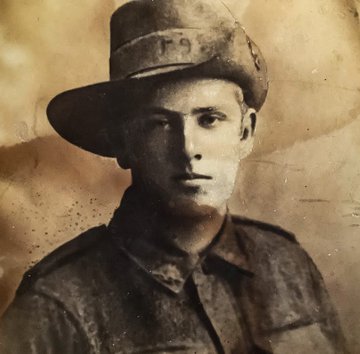
Edward Leslie DOWNIE
Eyes blue, Hair fair, Complexion fair
Edward Leslie DOWNIE – A Newcastle Son Lost at Fromelles
With thanks to local historian Gary Mitchell in writing this story.
Can you help find Les?
Les’s body was never found after the Battle of Fromelles, and there are no records of his burial.
A mass grave was found in 2008 at Fromelles, a grave the Germans dug for 250 Australian soldiers they recovered after the battle. As of 2024, 180 of these soldiers have been able to be identified via DNA testing.
Les may be among these remaining unidentified men. There is still a chance to identify him — but we need help. We welcome all branches of his family to come forward to donate DNA to help with his identification, especially those with roots in Newcastle, Newcastle, Islington, Wickham, or Maryville NSW.
See the DNA box at the end of the story for what we do know about his family.
If you know anything of contacts for Les, please contact the Fromelles Association.
Early Life
Edward Leslie (Les) Downie was born on 12 June 1897 in Islington, Newcastle, New South Wales. He was the fourth surviving child of Robert John Downie and Sarah Alice Morley:
- Robert (1886-1890)
- Ethel May (1888-1956)
- Phoebe Eliza (1891-1995)
- Robert James “Bob” (1894-1966)
- Edward Leslie “Les” (1897-1916)
- Hilda Florence (1904-1967)
Les was a true Newcastle son – descended from Scottish, English and Australian grandparents. Robert and Sarah raised their family at 48 Lewis Street, Maryville an inner city suburb on Newcastle Harbour and the Downie children would have attended the nearby Wickham Primary School. Les’s father Robert was a blacksmith.
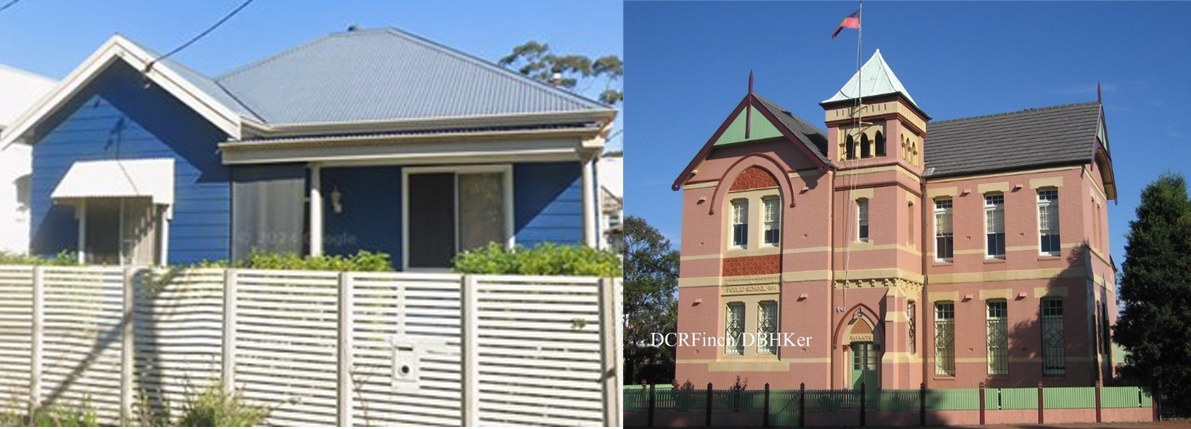
now a community centre
On his enlistment papers, Les also noted he had been in the Cadets, which would have been at Charlestown Public School. Cadet programs were widespread. "We pride ourselves on the fact we had no conscription, but many were drilled in military exercises in public and private schools across the country," says historian and author Maxwell Waugh. When war was declared in 1914, Australia had "a ready-made army of well-trained, disciplined and patriotic young lads, glad to risk their lives,"
After leaving school, Les worked as a seaman, a fitting trade for a boy from the Newcastle docks. He may have begun in 1912 when he was 16, as there are records of L. Downie from Newcastle, aged 16 in 1912 as an assistant steward, travelling from Port Pirie to Sydney on the Clan Ogilvy. Over the three or four years on interstate coastal shipping, Les progressed from assistant steward, to assistant cook, and finally to cook on the Staros. His last voyage on the Staros was from Melbourne to Sydney, arriving on 20 July 1915, after which he was discharged from his registration as a seaman, with very good conduct, and a week later he enlisted in the AIF in Newcastle. As he was 18, he needed his parents’ consent, which was given.
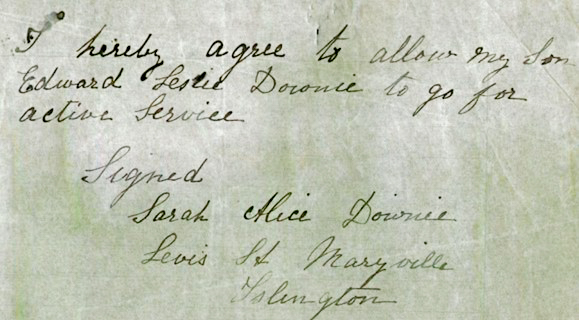
Off to War
Les was assigned to the 1st Battalion (11th Reinforcements) and then began his military training. Only two months later, his family and neighbours had proudly watched him and fifty-five other local Islington recruits receive farewell medallions at Mr Herbert’s Picture Theatre—a night filled with community spirit, speeches, and song as the young men were publicly honoured before leaving Australia:
Medals were presented to fifty-five local recruits at Mr Herbert’s Picture Theatre, Islington, including Private E. L. Downie, during a crowded farewell gathering filled with “cheers, music, and patriotic enthusiasm.” The presentation was organised by local residents to honour the young men who had enlisted from the district before their departure from Australia. The medals were inscribed “From the citizens of Islington, New South Wales, He answered the call.”
Les embarked from Sydney on 5 October 1915 aboard HMAT A32 Themistocles for the long trip to Egypt.
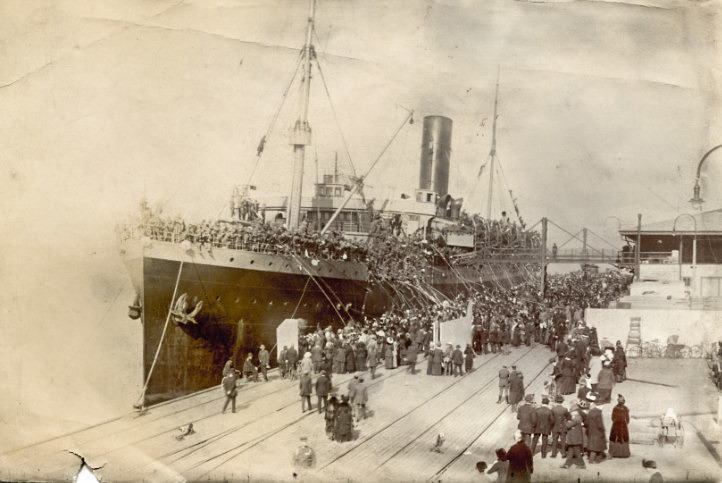
They arrived at Port Said in Egypt in the first week of January 1916 and the were moved to the training camp at Tel-el-Kebir, which was about 110 km northeast of Cairo. The 40,000 men in the camp were comprised of Gallipoli veterans and the thousands of reinforcements arriving regularly from Australia. With the ‘doubling of the AIF’ as it expanded from two infantry divisions to five, major reorganisations were underway. The 53rd Battalion was formed on 16 February 1916 and was made up of Gallipoli veterans from the 1st Battalion and the new recruits from Australia. Les was among those transferred.
The Gallipoli soldiers in the 53rd were not slow in pointing out to whoever would listen that they were the “Dinkums” and the new recruits were the “War Babies”.
Source: - AWM4 23/70/1, 53rd Battalion War Diaries, Feb-July 1916, page 3
Training for all continued. In March they were sent to Ferry Post, on foot, a trip of about 60 km that took three days. It was a significant challenge, walking over the soft sand in the 38°C heat with each man carrying their own possessions and 120 rounds of ammunition. Many of the men suffered heat stroke.
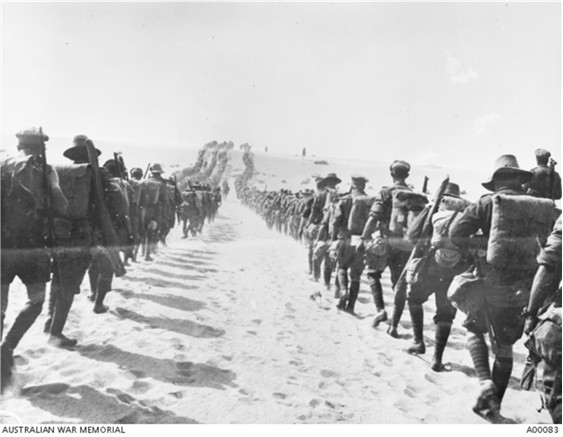
Once there, they remained at Ferry Post guarding the Suez Canal from any potential threats posed by the Ottoman Army. On 16 June they began the move to the Western Front. 32 officers and 958 soldiers of the 53rd left Alexandria on 19 June on the troopship HMT Royal George , bound for Marseilles, France to become part of the British Expeditionary Force on the Western Front. They arrived in Marseilles on 28 June and were immediately entrained for a 62-hour journey north to Hazebrouck before finally marching into the camp at nearby Thiennes in northern France. During their trip it was noted that their ‘reputation had evidently preceded them’, as they were well received by the French at the towns all along the route.
Source - AWM4 23/70/2 53rd Battalion War Diaries February - June 1916, p. 4
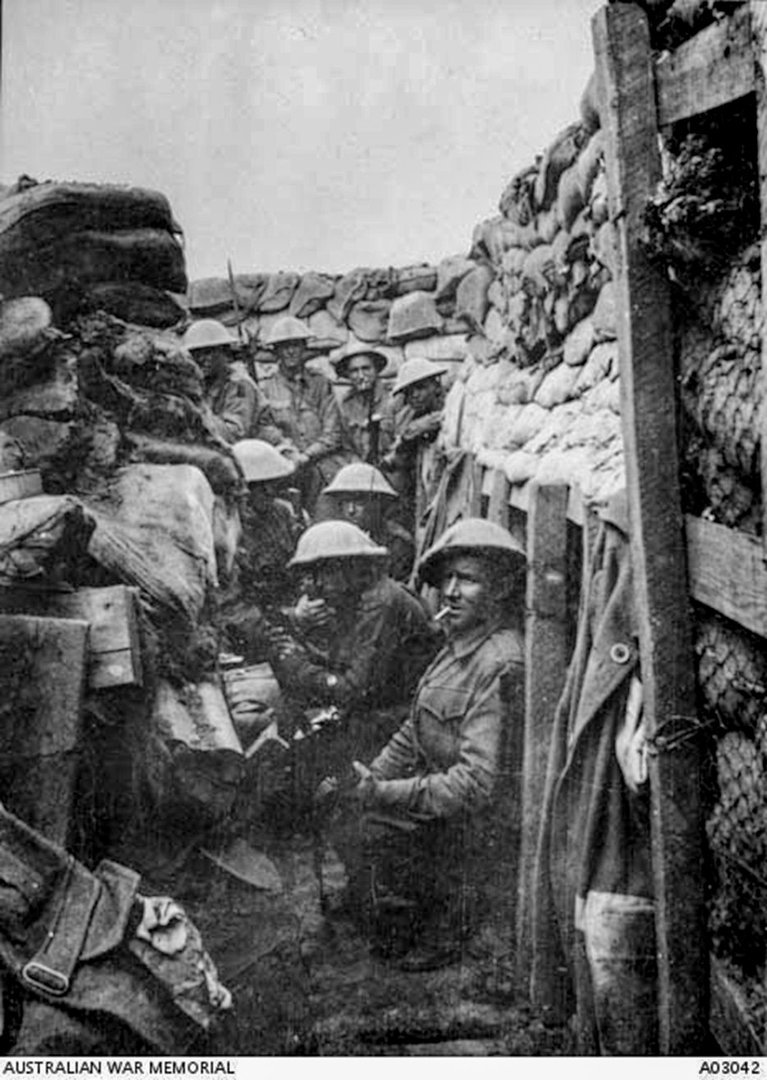
This area near Fleurbaix was known as the “Nursery Sector” – a supposedly relatively quiet area where inexperienced Allied troops could learn the harsh realities of Western Front trench warfare against the Germans. But the quiet times and the training period did not last long. On 8 July they began a 30 km march to Fleurbaix and on 10 July, the 53rd entered trenches for the first time. The front near Fleurbaix was anything but calm. Rain flooded the communication trenches, artillery fire harassed supply lines, and the soldiers dug in amid the mud and barbed wire of No-Man’s-Land.
The Battle of Fromelles
The men knew something was coming. They rehearsed attacks in replica trench systems, inspected bayonets and watched as huge guns rolled into place behind the lines. Then on 16 July, they moved up for an attack—only to have it postponed due to weather. The delay proved torturous. Private Jim Granger (4784), a young Dorrigo soldier, described the tension in his dugout:
“We were held in suspense for three days… like a criminal waiting to hear the verdict. We had no dugouts where we were in the supports and shrapnel was bursting all round.”
On the 19th, heavy bombardment was underway from both armies by 11.00 AM. At 4.00 PM the 54th Battalion rejoined on their left. All were now in position for battle.
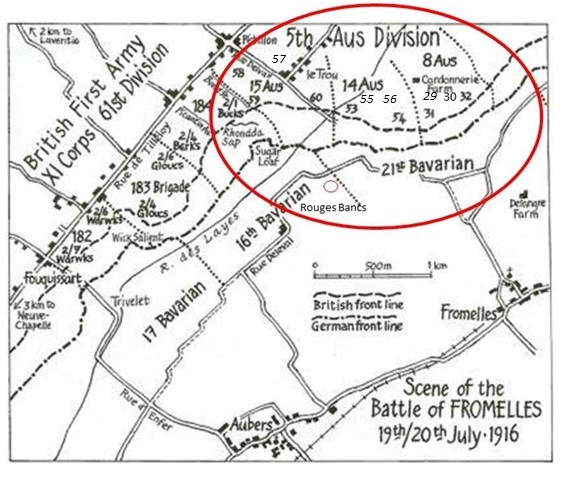
Zero Hour for advancing from their front-line trenches was to be 5.45 PM, but the Germans knew this attack was coming and were well-prepared. They opened a massive artillery bombardment on the Australians at 5.15 PM, causing chaos and many casualties. The main objective for the 53rd was to take the trenches to the left of a heavily armed, elevated German defensive position, the ‘Sugar Loaf’, which dominated the front lines. If the Sugar Loaf could not be taken, the 53rd and the other battalions would be subjected to murderous enfiladed fire from the machine guns and counterattacks from that direction.
As they advanced, they were to link up with the 60th and 54th Battalions on their flanks. The Australians went on the offensive at 5.43 PM. They moved forward in four waves – half of A & B Companies in each of the first two waves and half of Les’s C Company & D Company in the third and fourth. They did not immediately charge the German lines, they went out into No-Man’s-Land and lay down, waiting for the British bombardment to lift. Private Arthur Crewes (4755) wrote of the time:
“At 5.43 pm the signal for the charge sounded, and over the top we went into the face of death, shells bursting, machine guns rattling and rifles crackling.”
At 6.00 PM the German lines were rushed. The 53rd were under heavy artillery, machine gun and rifle fire, but were able to advance rapidly. Corporal J.T. James of C Company (3550) reported:
“At Fleurbaix on the 19th July we were attacking at 6 p.m. We took three lines of German trenches”
As below, the 14th Brigade War Diary notes that the artillery had been successful and “very few living Germans were found in the first and second line trenches”, but within the first 20 minutes the 53rd lost ALL the company commanders, ALL their seconds in command and six junior officers.
Source - AWM C E W Bean, The AIF in France, Vol 3, Chapter XII, pg 369
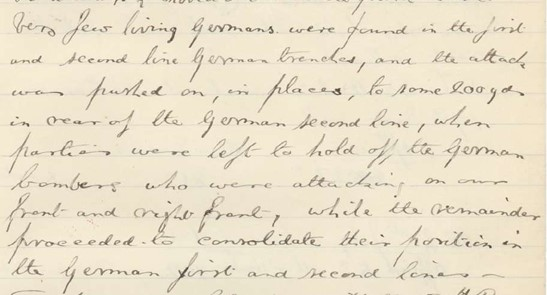
Some of the advanced trenches were just water filled ditches, which needed to be fortified by the 53rd to be able to hold their advanced position against future attacks.
They were able to link up with the 54th on their left and, with the 31st and 32nd, occupied a line from Rouges Bancs to near Delangre Farm, but the 60th on their right had been unable to advance due to the devastation from the machine gun emplacement at the Sugar Loaf. They held their lines through the night against “violent” attacks from the Germans from the front, but their exposed right flank had allowed the Germans access to the first line trench BEHIND the 53rd, requiring the Australians to later have to fight their way back to their own lines. By 9.00 AM on the 20th, the 53rd received orders to retreat from positions won and by 9.30 AM they had “retired with very heavy loss”.
Source - AWM4 23/70/2 53rd Battalion War Diaries July 1916 page 7
Of the 990 men who had left Alexandria just weeks before, the initial count at roll call was 36 killed, 353 wounded and 236 missing:
“Many heroic actions were performed.”
To get some perspective of the battle, when Charles Bean, Australia’s official war historian, attended the battlefield two and half years later , he observed a large quantity of bones, torn uniforms and Australian kit still on the battlefield. The final impact of the battle on the 53rd was 245 soldiers were killed or died from their wounds and, of this, 190 were not able to be identified, including Les.
Les’ Fate
There are two soldiers who provided statements about what happened to Les. While they both confirm he was killed in the early stages of the battle, the details don’t seem to fit. Private David Shields (3482) said that Les was injured before the attack started from the heavy bombardment, but saw him headed to the Dressing Station for treatment. Pte Shields seemed optimistic about Les’ fate:
“Downie was hit by shrapnel in the support trench on the afternoon (about 3 p.m.) of the charge at Fromelles on 19.7.16. This was before the charge and I saw him being led away to the Dressing Station after hearing the call for stretcher bearers. The bombardment was then on and was very heavy… With ordinary luck he should have got back safely as he was able to walk with assistance and there was a sap leading back, but it was of course subject to shrapnel and shell fire:
I had not heard that he was “missing”.`
”
However, Sergeant Lawrence Apolony (1212) gave a several statements, the first in June 1917 and the second in August 1917, but both of his statements clearly put Les as being a part of the charge over the parapet:
”I am sorry to say I can’t give any information concerning him as I never saw him after we left the trenches. I cannot say whether he was killed or captured, but he was all right about 10 minutes before we went over the Parapet.”
“At Fleurbaix on 19th July 1916 Downie was in my section. We went over the top about 6 o’clock. Just outside our trenches Downie fell. He received a wound in the head and apparently was instantly killed. I am quite sure the man who fell as described was Pte Downie.”
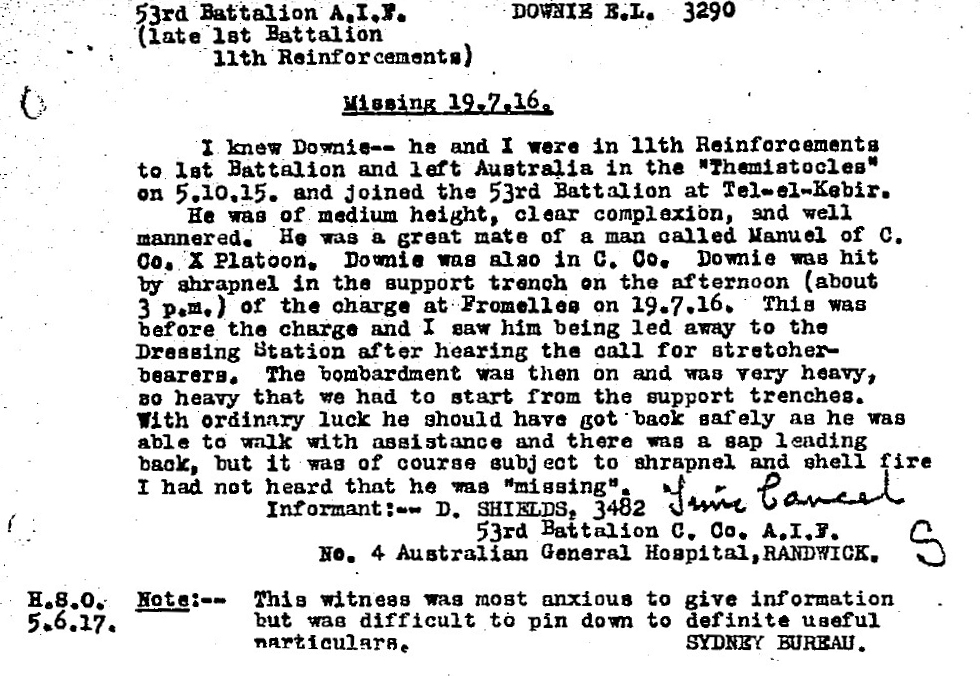
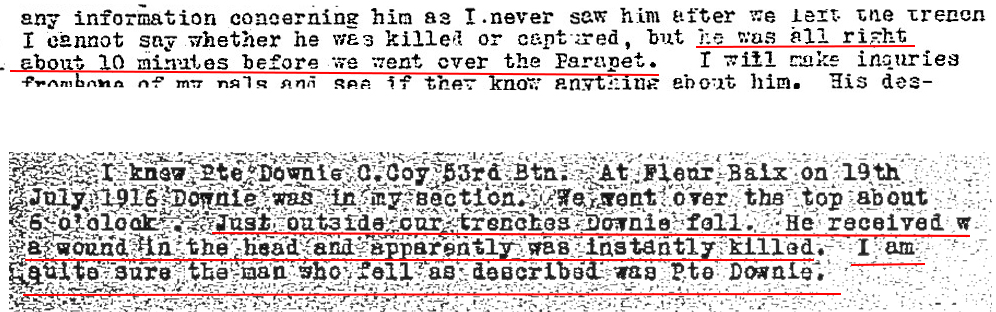
These statements are not necessarily contradictory, however. David Shields said Les was injured at 3.00 PM, so it is possible that he was treated and returned to his unit before being killed in the initial charge as reported by Lawrence Apolony. In any case, even though he was killed in the vicinity of the Australian lines, his body was not recovered.
The Family After the Battle
Given the scale and the chaos of the battle, hard news about any individual soldier was difficult to come by while the Army and the Red Cross combed thru witnesses, POW records and other sources for details that they could find. By early September basic information was appearing in the local newspapers:
”Mrs. R. Downie, of Lewis Street, Maryville, has received official intimation that her son, Private E. L. Downie, has been reported missing since July 19th.”
Les’ family were clearly concerned about the lack of detail of what happened to Les and they wrote to the Red Cross in October.
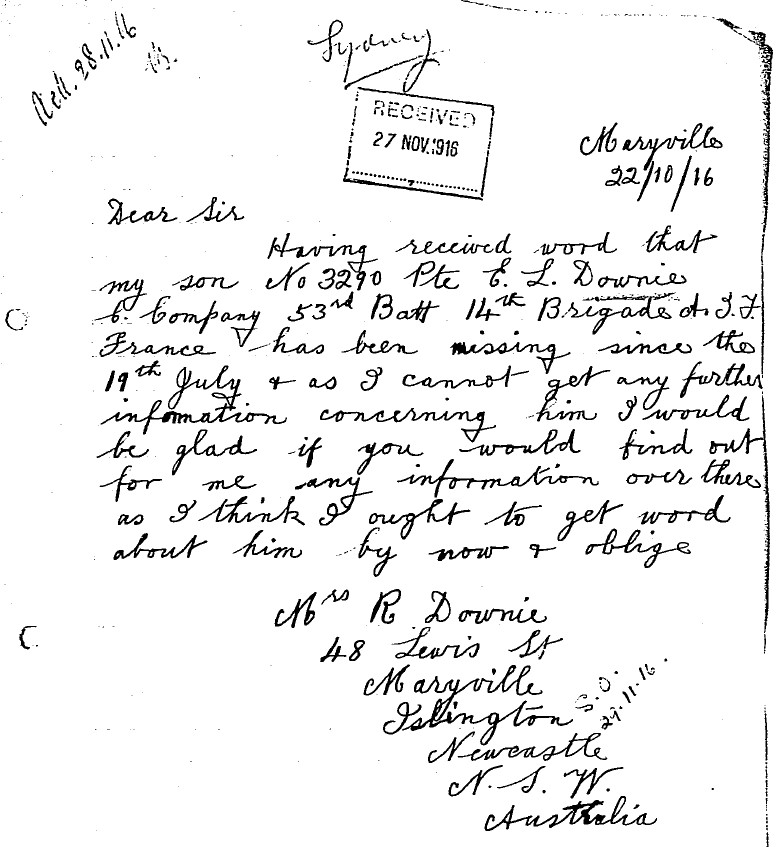
The reply cited that the authorities were “using their utmost endeavours to trace these members.”
Source - NAA: B2455, Downie, Edward Leslie – First AIF Personnel Dossiers, 1914-1920, page 27
Robert Short, of the Australian Branch of the Red Cross, tried to lend his hand in assistance for Les’ family, as well as other Newcastle soldiers.
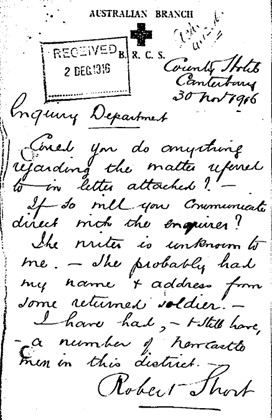
Despite everyone’s best efforts, there was no further information to be provided - “We are very sorry we have as yet been unable to obtain any information concerning your son. We sympathise most deeply with you in your anxiety to hear something definite, but in cases of this sort news is often such a long time in coming to hand. As soon as we obtain any we will at once send it to our office in Sydney… Assuring you of our desire to help.”
Source - Australian Red Cross Wounded and Missing Files – Downie, Edward Leslie, p. 5
It wasn’t until a Court of Enquiry, held in the field, 2 September 1917, formally pronounced Les’ fate as 'Killed in Action, 19 July 1916. In October 1917, the people of Maryville gathered to honour their fallen. During a memorial concert at the Wickham Railway Institute, the Maryville Welcome Home and Send-Off Committee presented gold bars inscribed “He died a Hero” to the families of local soldiers who had been killed in action:
“The ceremony was performed by Mrs. Hawkins, treasurer of the committee, who pinned the bars upon the breasts of Mrs. Downie, mother of the late Private E. L. Downie... The bars bore the inscription, “He died a Hero,” and the whole of the recipients were visibly affected as they received the mementoes.”
A year later, the family’s private grief became public through multiple In Memoriam notices in the newspapers, a few of which are below –
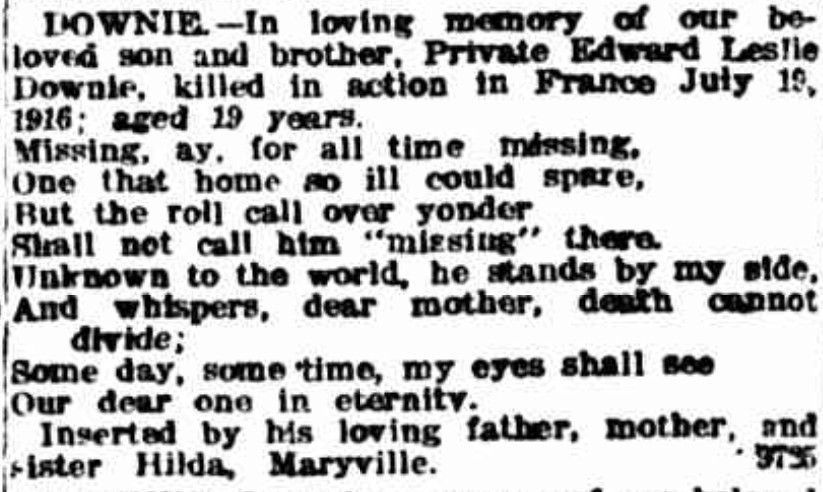
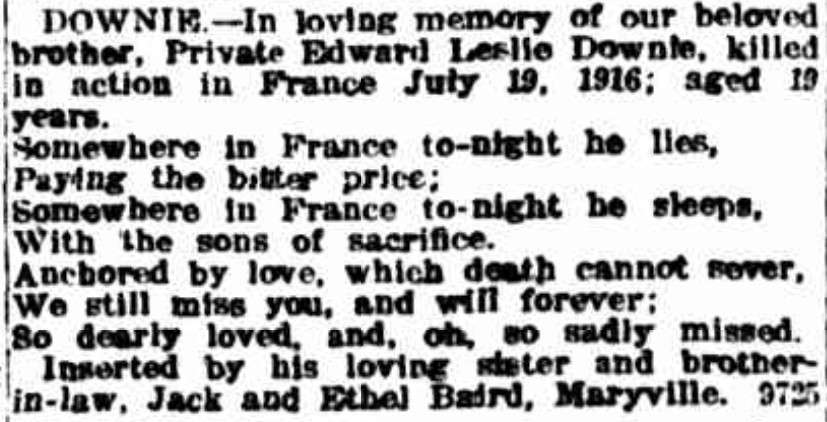
Les was awarded the 1914-15 Star Medal, the British War Medal, the Victory Medal, a Memorial Plaque and a Memorial scroll. He is commemorated at:
- V.C. Corner Australian Cemetery Memorial at Fromelles (Panel 8)
- Australian War Memorial Roll of Honour (Panel 157)
- the Charlestown Public School Honour Roll
- the Wickham Soldiers’ Memorial (Hawkins Oval)
- 3rd Australian Garrison Artillery Roll of Honour
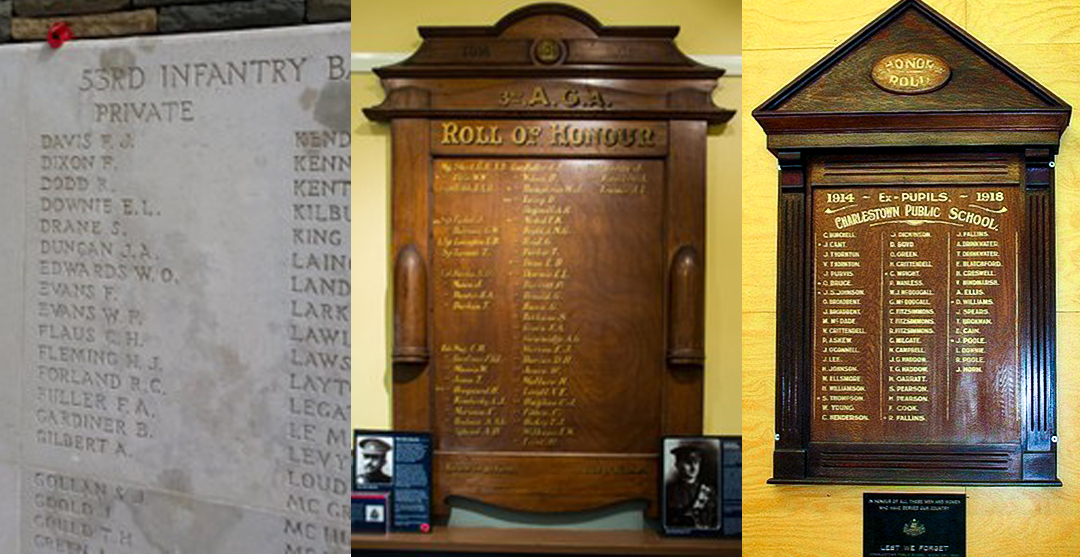
VC Corner, 3rd Australian Garrison Artillery Roll of Honour, Charlestown Public School Honour Roll
Les’s parents both rest at Sandgate Cemetery, though their headstones bear no inscription for their lost son—an absence later remedied by local historian Gary Mitchell, who placed poppies at their graves.
Finding Edward
Les’ remains were not recovered, he has no known grave. After the battle, the Germans recovered 250 Australian soldiers and placed them in a burial pit at Pheasant Wood. This grave was discovered in 2008 and since then efforts have been underway to identify these soldiers by DNA testing from family members. As of 2024, 180 of the soldiers have been identified, including 15 of the 190 unidentified soldiers from the 53rd Battalion. We welcome all branches of Les’ family to come forward to donate DNA to help with his identification - if you are related, or know someone connected to the Downie or Morley families from Newcastle, Islington, Wickham, or Maryville, please contact the Fromelles Association.
We hope that one day Les will be named and honoured with a known grave.
Please visit Fromelles.info to follow the ongoing identification project and Les’ story.
DNA samples are being sought for family connections to
| Soldier | Edward Leslie Downie (1897–1916) |
| Parents | Robert John Downie (1864–1938), b Newcastle, NSW – Lived in Maryville, NSW and Sarah Alice Morley (1863–1935), b Sydney, NSW – Lived in Maryville, NSW |
| Siblings | Ethel May Downie (1888–1956) – married John Henry Baird | ||
| Phoebe Eliza Downie (1891–1985) – married Samuel Miles, later Lionel Mawer, Francis Browning, and Joseph Hamment | |||
| Robert James “Bob” Downie (1894–1966) – married Laura Millicent Spruce | |||
| Hilda Florence Downie (1901–1967) – married Thomas Tudor |
| Grandparents | |||
| Paternal | Robert Downie (1842–1903) – Born Kilsyth, Stirlingshire, Scotland – Lived in Balmain North, NSW and Phoebe Eliza Butt (1843–1918) – Born NSW – Lived in Mosman, NSW | ||
| Maternal | Edward Morley (1829–1895) – Born Hexham, NSW – Lived in Islington, NSW and Julia Maria Jones (1832–1868) – Born Southwark, London, England – Lived in Newcastle, NSW |
Seeking DNA Donors

Contacts
(Contact: carla@fromelles.info or geoffrey@fromelles.info).
(Contact: army.uwc@defence.gov.au or phone 1800 019 090).
Donations
If you are able, please contribute to the upkeep of this resource.
(Contact: bill@fromelles.info ).