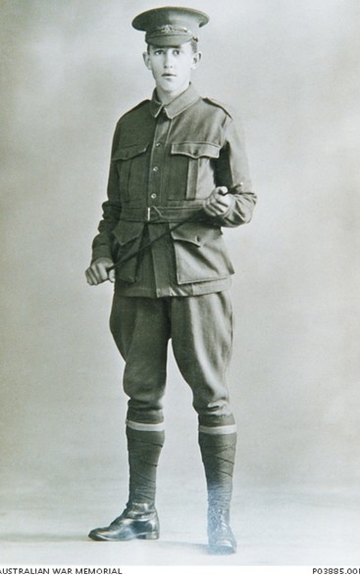
Murdoch MCLEAN
Eyes greenish brown, Hair brown, Complexion medium
Murdoch McLean – The Electrician from Outtrim
With thanks to Wendy Dunton for her help in writing this story
Early Life
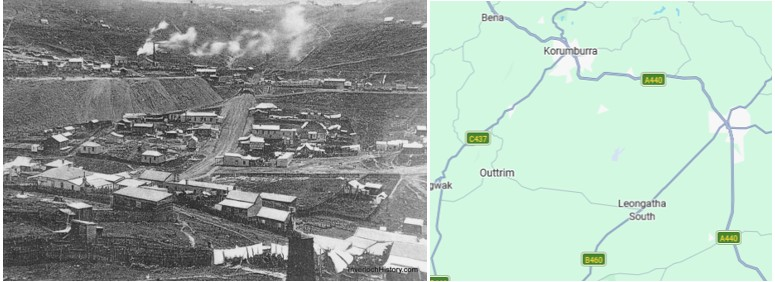
Murdoch McLean was born in 1897 at Outtrim, in Victoria's South Gippsland region, the son of Hector Alexander McLean (1857–1921) and Sarah Ellis (1860–1947). He was named after his paternal grandfather, Murdoch McLean, who had emigrated from Perthshire, Scotland. Murdoch grew up in a large Presbyterian family during a period when South Gippsland was developing rapidly through coal mining, farming and timber industries. His father, Hector Alexander McLean, was known locally as Alexander McLean and worked as a storekeeper, contractor and later a farmer. During the late nineteenth century he operated stores and leased land in the Upper Beaconsfield district before the family eventually settled around Outtrim and later Mirboo North.
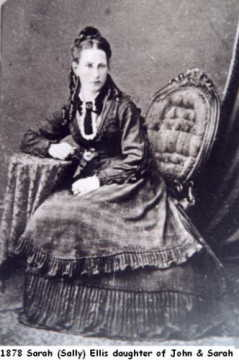
Hector and Sarah McLean raised seven children:
- Daisy Catherine Sarah (1889–1970)
- Ella Dorothy (1891–1975)
- Hector Alexander "Alexander" (1892–1947) – served during the First World War with the 11th Light Horse Regiment and later the 4th Machine Gun Squadron. He also served during the Second World War as an Able Seaman.
- Leslie John (1894–1898), who died aged four.
- Murdoch McLean (1897–1916)
- Stuart Ellis McLean (1900–1954)
- Norman McLean (1903–1971), who later served in the Second AIF as VX46809.
Before enlisting, Murdoch worked as an electrician, a skilled occupation for a young man of nineteen.
Off to War
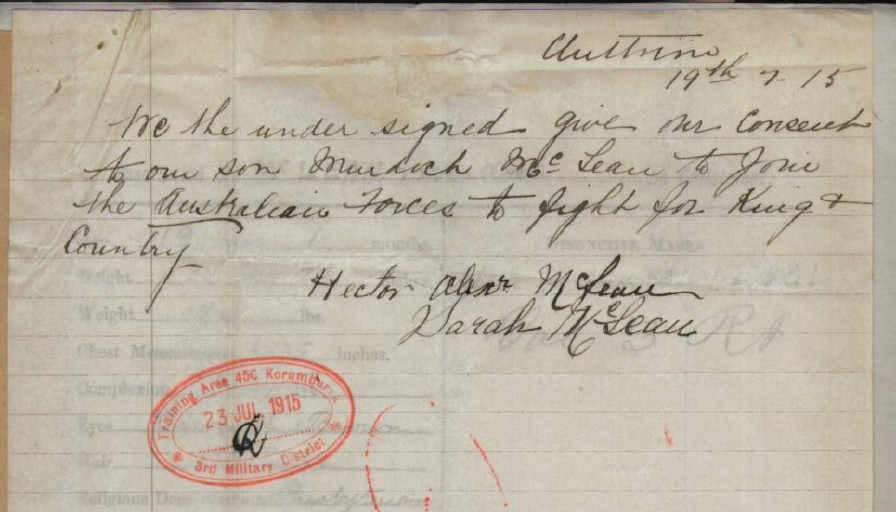
The 59th Battalion was raised in Egypt on 21 February 1916, following the evacuation from Gallipoli and the influx of reinforcements from Australia. Half of its men were experienced soldiers from the 7th Battalion; the other half were new recruits, many from rural Victoria. The battalion formed part of the 15th Infantry Brigade under Brigadier General Harold “Pompey” Elliott, within the newly created 5th Australian Division. Because Murdoch was still only nineteen years old, his parents were required to provide written consent for him to enlist.
On 19 July 1915 at Outtrim, Hector and Sarah McLean signed a handwritten note giving permission for their son to join the Australian Imperial Force for overseas service. Soon afterwards, Murdoch formally enlisted in Melbourne and began training with the 14th Reinforcements to the 8th Battalion.
After arriving in Egypt aboard HMAT Themistocles, Murdoch was briefly taken on strength with the 58th Battalion at Ferry Post on 1 April 1916 before transferring to the 59th Battalion the following day. Training took place at Tel-el-Kebir, followed by a three-day march through the desert to Ferry Post. There, the battalion continued training and took part in canal defence duties.
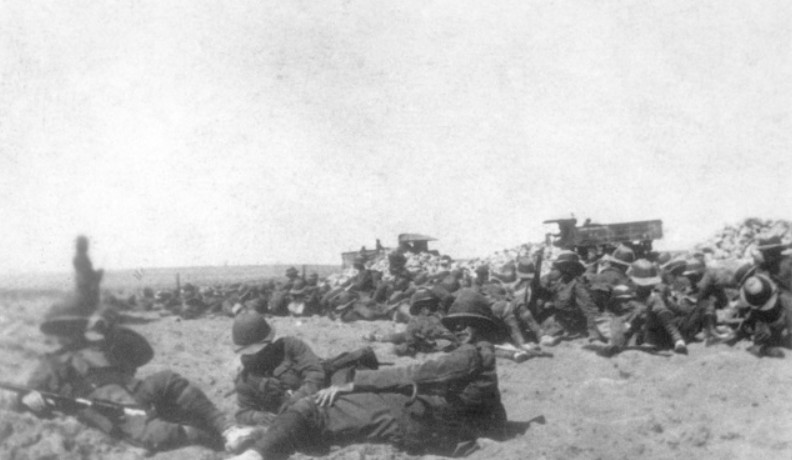
On 18 June 1916, the 59th boarded the transport Kinfauns Castle, arriving at Marseilles on 29 June. By 2 July, they were stationed at Steenbecque in northern France, around 35 kilometres from the front. As they moved closer to the front line, the men were issued gas masks and steel helmets, and underwent instruction in trench warfare. On 9 July, they were moved to Sailly-sur-la-Lys, positioned just 1,000 yards from the German lines near the Sugarloaf salient — a heavily fortified section of the enemy defences. Final preparations were made for what would be the battalion’s first major action on the Western Front.
The Battle of Fromelles
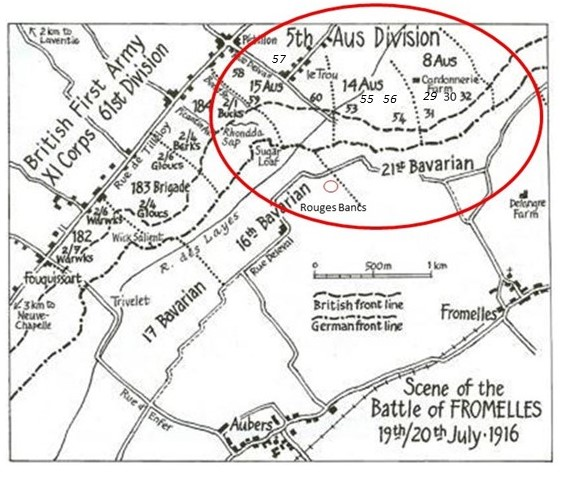
The Battle of Fromelles began on the evening of 19 July 1916 as part of a diversionary attack intended to prevent German reserves from being transferred to the Somme offensive. The 59th Battalion occupied one of the most difficult positions in the entire assault, directly opposite the Sugarloaf salient—a heavily fortified German strongpoint that dominated the battlefield with interlocking machine-gun fire. At 5.45 PM, the battalion attacked in four waves at five-minute intervals, with A and B Companies leading and C and D Companies following behind. The advance took place in broad daylight across open ground under full German observation. Murdoch McLean was among the young Victorian reinforcements advancing into battle for the first time. The attack immediately ran into devastating fire.
Machine guns from the Sugarloaf swept No-Man's-Land while German artillery and rifle fire tore through the advancing lines. Messages sent back from the battlefield during the assault captured the desperate situation unfolding before brigade headquarters:
"Every man who rises is shot down."
"Cannot get on — the trenches are full of the enemy."
"They were enfiladed by machine guns in the Sugar Loaf and melted away."
Sergeant James Aikins of B Company later recalled the advance:
"Anyhow, it instilled courage to notice how those brave boys faced the machine gun fire directed as soon as the first line got over, and the fire became more fierce as each of the four waves left. I was in the second... a storm of bullets which were flying, and the earth shook with the concussion caused by the explosion of the enemy's shells."
The battalion suffered heavily from the outset. Its commanding officer was disabled by shell shock early in the attack, and command passed to the second-in-command, Major H.T.C. Layh, who also became a casualty after being blown into a water-filled shell hole by the force of an exploding shell.
Source - AWM4 23/15/6, 15th Infantry Brigade War Diary, Appendix No. 12, Report on Operations, 19–20 July 1916
Despite the intensity of the fire, small groups of Australians reached the German parapet, captured prisoners and briefly established footholds in sections of the enemy trench system. Without reinforcement or coordination with neighbouring units, however, these gains could not be held. To the right of the 59th Battalion, the British 184th Brigade suffered similarly severe losses and by 8.00 PM had ceased offensive operations. Poor communication meant the Australians continued fighting with their right flank exposed. During the night, elements of the 59th attempted to consolidate approximately 100 yards forward of the German line, but the position proved impossible to hold.
At 11.15 PM, brigade headquarters received reports that the 58th and 59th Battalions were attempting to consolidate their position. Ten minutes later, survivors had begun drifting back, and patrols reported that most officers had been killed or wounded and that no definite firing line remained.
Source - AWM4 23/15/6, Appendix No. 12
During the early hours of 20 July, the shattered battalion was ordered to withdraw. By 8.00 AM, only four officers and ninety other ranks answered the roll call. Murdoch was among those who did not return. Amid the smoke, shellfire and confusion of No-Man's-Land, the nineteen-year-old electrician from Outtrim disappeared during the fighting and was initially reported as missing. Sergeant James Aikins later summed up the battle:
" I say if Hell is any worse I do not care to go there."
Private George Martindale, one of the few survivors of the assault, later recalled:
"We went into action… a regiment at full strength – ninety seven answered their names – not one in ten."
The brigade's operational report concluded:
"The attack was made in broad daylight… The effect of the fire was devastating and order was lost."
Initial casualty returns recorded 26 men killed or died of wounds, 394 wounded and 274 missing—a total of 694 casualties. Later analysis confirmed that 338 men of the 59th Battalion were killed in action or died of wounds. More than 240 of the dead were never identified. Throughout 20 and 21 July, patrols moved into No-Man's-Land wherever possible to recover wounded soldiers. Brigadier General Elliott later reported that more than 200 wounded men were brought back from the battlefield by these rescue parties.
When Charles Bean, Australia’s official war historian, visited the Fromelles battlefield more than two years later, he observed torn uniforms, Australian kit, and bones still lying on the ground — silent evidence of the scale of the disaster. The 59th Battalion was withdrawn from the line and rebuilt over the following months, but for those who survived, the memory of Fromelles would never fade.
After the Battle
In the aftermath of the Battle of Fromelles, Murdoch McLean was officially listed as missing. Like hundreds of other families across Australia, the McLeans endured months of uncertainty while the army attempted to determine what had happened to their son. The battlefield itself remained strewn with the dead and wounded for days after the fighting ended. Many soldiers who fell in no-man’s-land could not be reached during the battle, while others were buried hastily by German or Australian burial parties. A handwritten note later added to Murdoch’s service file stated:
“Presume Buried In No Man's Land approx 5J90 43 to 5K02.5.1 Sheet Hazebrouck 5A.”
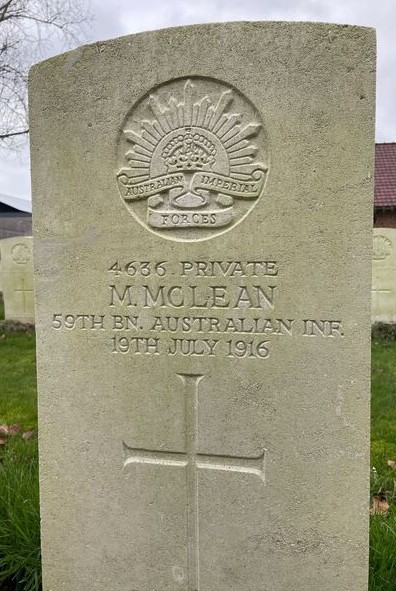
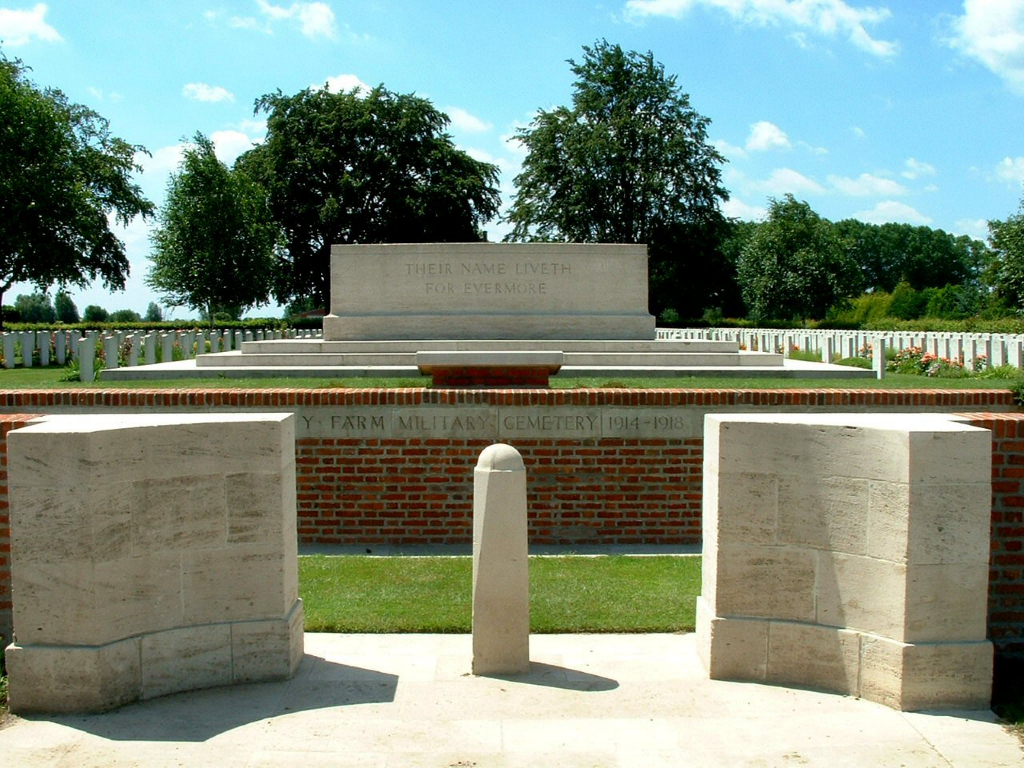
For more than a year his fate remained uncertain. Finally, a Court of Enquiry held in the field on 29 August 1917 officially determined that Murdoch had been killed in action on 19 July 1916. Unlike many of the men lost at Fromelles whose remains were never identified, Murdoch was eventually recovered and buried at Y Farm Military Cemetery, Bois-Grenier, France. His grave today stands among rows of Australian soldiers who died during the disastrous attack.
Back in Victoria, the war continued to shape the McLean family.

Murdoch’s brother, Hector Alexander “Alexander” McLean, returned to Australia in 1919 after service with the 11th Light Horse Regiment and 4th Machine Gun Squadron, suffering from malaria after the war. Another brother, Norman McLean, would later enlist for service during the Second World War. Murdoch’s father, Hector Alexander McLean, died suddenly at Mardan in September 1921.:
“Mr Hector McLean, farmer, of Mirboo North after taking a drink of milk, fell back dead in his chair. The cause of death was heart trouble. He was 64 years of age.”
Murdoch’s mother Sarah survived until 1947. The grief carried by families like the McLeans became part of the lasting legacy of Fromelles across rural Australia.
Murdoch rests among his comrades at Y Farm Military Cemetery, Bois-Grenier, France. Unlike many of the men who fell at Fromelles and have no known grave, his final resting place is known, allowing his family to visit, remember and honour his sacrifice.
Family Recollections
More than one hundred years after Murdoch's death, his great-niece, Wendy Dunton, travelled from England to visit his grave at Y Farm Military Cemetery. Her journey became a deeply personal connection between the young soldier who never returned home and the family who continue to remember him today.
As I child and young adult, I was always told by the family that Great Uncle Murdoch was killed at Gallipoli and at that age wasn’t really interested in those sort of things. I don’t know anything else about my Grandfather’s side of the family. I was told there was a brother killed under a tree when he and his horse were struck by lightning and another killed by a falling tree.
I have no contact with the family now and my mother passed in early January this year but we found out that Great Uncle Murdoch was killed in Fromelles when I was researching the Military history of my Mother, Father and Grandfather.
In July 2016 I travelled on holiday to the UK for ‘a trip of a lifetime’ I decided. I had five weeks doing the touring and having six days free time in London I had previously decided to travel to France to visit my Great Uncle Murdoch’s grave.
I had already been in contact with the Commonwealth War Graves people and a very helpful young lady gave me advice and the details of exactly where Great Uncle Murdoch’s grave was. So on a Monday morning (in the middle of the Soccer World Cup in France) I headed by the train, arriving in Lyon luckily on a rest day so it was very quiet. I don’t really speak any French but I was helped by the friendly staff and boarded the train to Armentieres and then on to Bois Grenier.
I was lucky as there was one taxi at the station and neither of us spoke the other’s language. Luckily I had my email print out and he knew the address and off we went. The countryside around the area is a magnificent farming area and we drove down a few roads and the onto a gravel road. I did wonder at one stage whether this could all end in tears but just passed a large farm building there it was. The magnificent Y Farm Military Cemetery. Walking around while the driver waited patiently and with the sounds of farmyards and birds it was the most serene site. I quickly found Great Uncle Murdoch’s grave and placed his photo and a handmade poppy I’d brought with me. Had a chat with him.
There are over 800 graves there from the British Expeditionary Forces and including two Germans. Many have been brought from other graves in the area. I am so happy to have visited his final resting place and feel lucky that our family are able to know that he was given his own grave and so lovingly looked after.
I thank the Fromelles Association for contacting me recently and providing me and my family with the amazing history surrounding Great Uncle Murdoch. I only wish my Mum could have read about his amazing life and service to his Country.
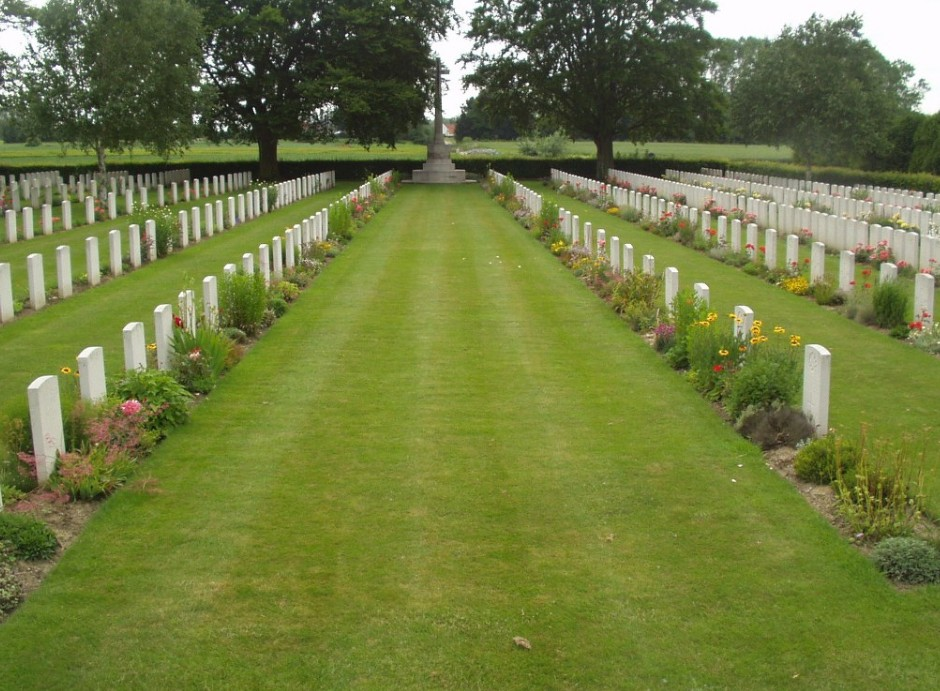
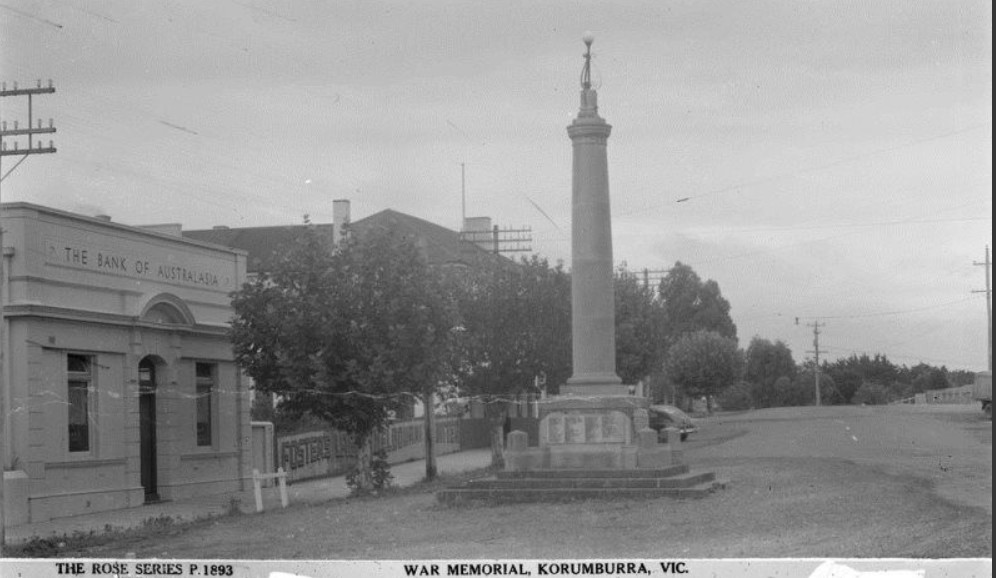
Murdoch is commemorated at:
- Y Farm Military Cemetery, Bois-Grenier, France
- Australian War Memorial Roll of Honour, Canberra – Panel 168
- Korumburra War Memorial, Victoria
The Fromelles Association would love to hear from you

Contacts
(Contact: carla@fromelles.info or geoffrey@fromelles.info).
(Contact: army.uwc@defence.gov.au or phone 1800 019 090).
Donations
If you are able, please contribute to the upkeep of this resource.
(Contact: bill@fromelles.info ).