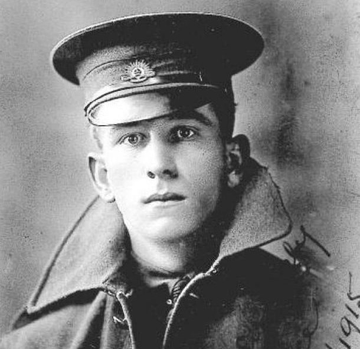
Thomas Percival HAGAN
Eyes Unknown, Hair Unknown, Complexion Unknown
Thomas “Perce” Hagan – "The sunniest pal a chap could have."
Can you help find Perce?
Thomas Percival Hagan’s body was never found after the Battle of Fromelles, and there are no records of his burial.
A mass grave was found in 2008 at Fromelles, a grave the Germans dug for 250 Australian soldiers they recovered after the battle. As of 2024, 180 of these soldiers have been able to be identified via DNA testing.
Perce may be among these remaining unidentified men. There is still a chance to identify him — but we need help. We welcome all branches of his family to come forward to donate DNA to help with his identification, especially those with roots in Semaphore, SA
See the DNA box at the end of the story for what we do know about his family.
If you know anything of contacts for Perce, please contact the Fromelles Association.
Please contact the Fromelles Association of Australia to find out more.
Early Life
Thomas Percival "Perce" Hagan was born on 21 June 1894 at Semaphore, South Australia, the second child of Thomas Page Hagan (1869–1931) and Edith Alice Loveday (1873–1921). His father had been born at Port Glasgow, Renfrewshire, Scotland, before emigrating to South Australia, where the family settled at Woolnough Road, Exeter, in Adelaide's western suburbs. Perce grew up in a family that experienced both joy and heartbreak. Children of Thomas and Edith:
- William Sydney (1893–1893), died in infancy
- Thomas Percival "Perce" (1894–1916)
- Ernest Alfred (1896–1940)
- Edith Alice (1897–1898), died in infancy
With only Perce and his younger brother Ernest surviving childhood, the two brothers developed a close bond. Ernest later joined the Naval Reserve, enlisting on 31 January 1911 (No. 214). Perce completed Grade 6 at school before joining George Wills & Co. as a Customs Clerk. Outside work he became well known around Semaphore through his involvement in scouting, military training and local sport. Military service became an important part of Perce's life from an early age. He completed four years with the Senior Cadets before serving more than three years in the Citizen Military Forces, steadily developing the leadership skills that would later see him commissioned as an officer in the Australian Imperial Force. Scouting was another of Perce's great passions.
In August 1912 he was appointed Assistant Scoutmaster of the 1st Semaphore Troop and quickly became one of the movement's young leaders. He also earned qualifications as a King's Scout and Surveyor.
Source: 'BOY SCOUTS' ASSOCIATION.', The Register (Adelaide), 11 August 1916.
Perce was equally active in the Semaphore sporting community. He played Australian Rules football, rowed and enjoyed tennis. In 1910 newspapers reported that the newly formed football club of the 1st Semaphore Scout Troop had elected "T. P. Hagan" as honorary secretary.
Source: '1st SEMAPHORE TROOP.', The Register (Adelaide), 11 June 1910.
Before the outbreak of the First World War, Perce formed a close friendship with fellow South Australian Eric Chinner while serving together in the Citizen Forces. Both young men were selected to attend a special officers' training course at the Royal Military College, Duntroon, in 1915 before receiving commissions in the newly raised 32nd Battalion. Their friendship, forged before the war, would continue through training in Australia, service in Egypt and ultimately to the Battle of Fromelles.
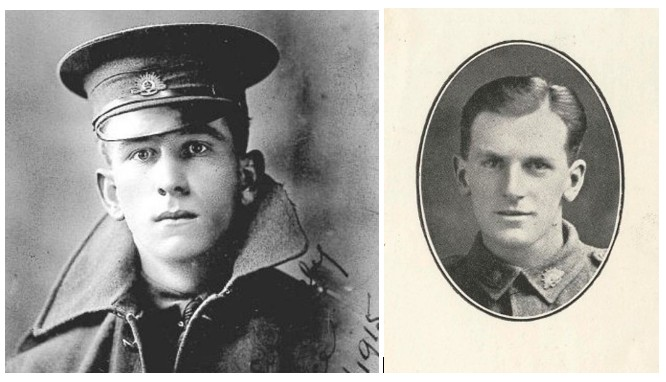
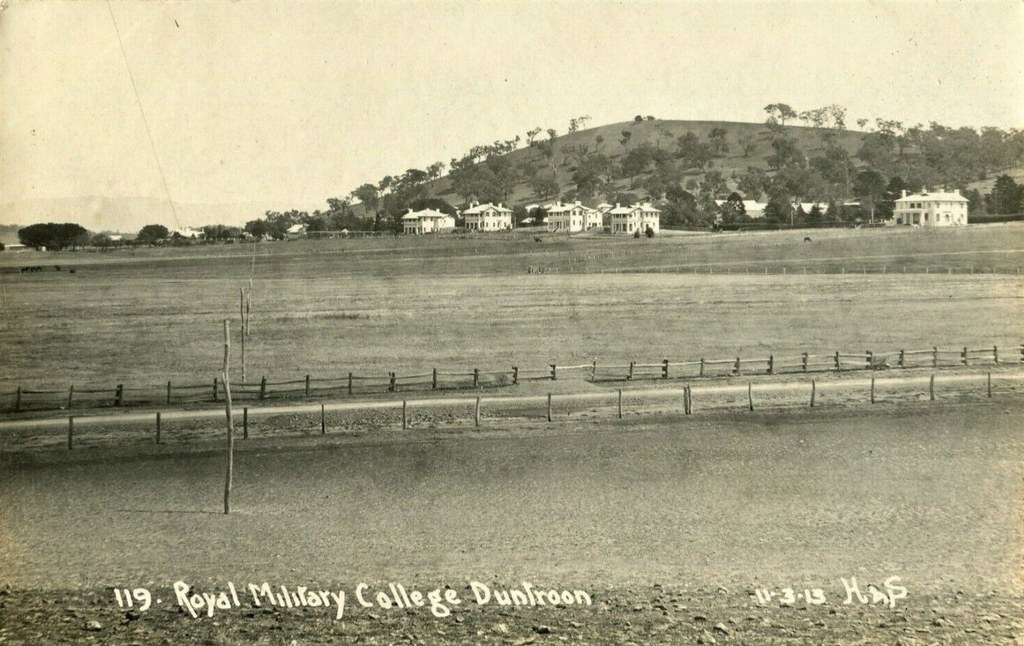
Off to War
Perce applied for a commission in the Australian Imperial Force on 30 September 1915 and was appointed as a Second Lieutenant in B Company of the newly raised 32nd Battalion. The battalion formed part of the 8th Brigade, 5th Australian Division, and trained at Mitcham Camp before embarking for overseas service.
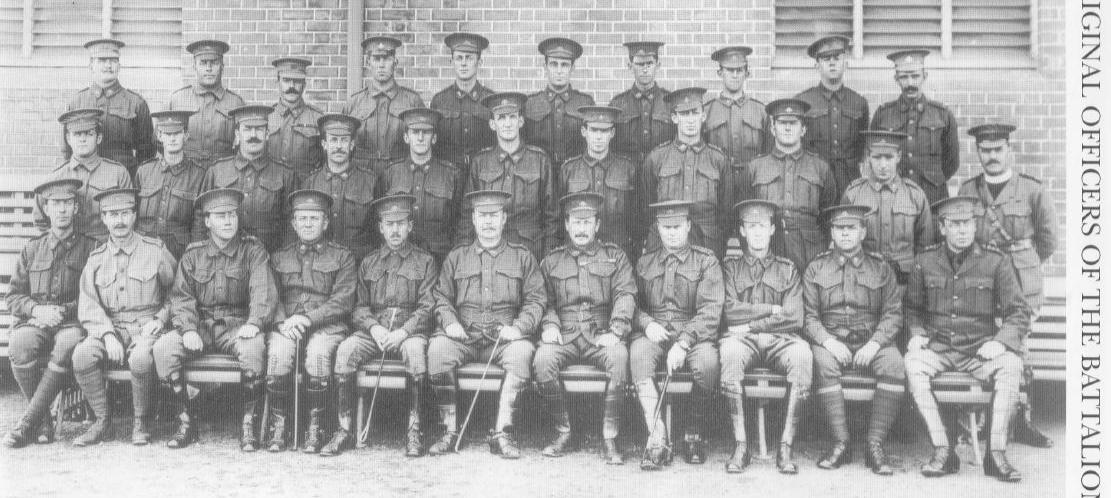
Cheltenham Racecourse.
Front Capt. R.A. Geddes. Capt. C.S. Tratman, Capt. F.C. Lloyd, Major T. Flintoff, Major J.J. Hughes 2IC, Lieut-Col D.M.R. Coghill CO, Capt. J.K.Paul, Major C.T. Knight, Capt. A.R. White, Capt. R.R.R.E. Smythe, Capt. H.A. Hagen
Middle Lieut. R.H. Robinson, Lieut. R.A. Keay, Lieut. J. Ion, Lieut. C.E. Viner, Lieut. E.H. Chinner, Lieut. J.B. O’Connor, Lieut. J.M. Hutchens, Lieut. C.Q. Taplin Lieut. A.T. Rogers, Lieut. C.V. Wright, Chaplain D. McNicol
Rear Lieut. H.F.W. Hulks, Lieut. F.W. Roberts, Lieut. W. Inglis, Lieut. W.A. Coward, Lieut. H.F. Moore, Lieut. S.A. Hunn, Lieut. T.P. Hagan, Lieut. A.E. Gepp, Lieut. C.L. Halkyard, 2Lieut. W.F. Andrews.
Among the newly commissioned officers of B Company was Perce's close friend, Eric Harding Chinner. Before the war the two young South Australians had served together in the Citizen Forces and attended a special officers' course at the Royal Military College, Duntroon. Their friendship continued into the newly raised battalion and would endure throughout training in Egypt and France. The 32nd Battalion embarked from Outer Harbor, South Australia, aboard HMAT Geelong on 18 November 1915, arriving at Suez a month later. Writing home soon after leaving Adelaide, Eric affectionately described Perce as:
"The sunniest pal a chap could have."
Although he occasionally caught Perce quietly looking at a photograph from home, Eric recalled that his friend never remained melancholy for long. He would then laugh and say, 'Hard cheese, ain't it, old man.' Source: Eric H. Chinner Papers, State Library Victoria, MS 11452, Letter written aboard HMAT Geelong, November 1915.
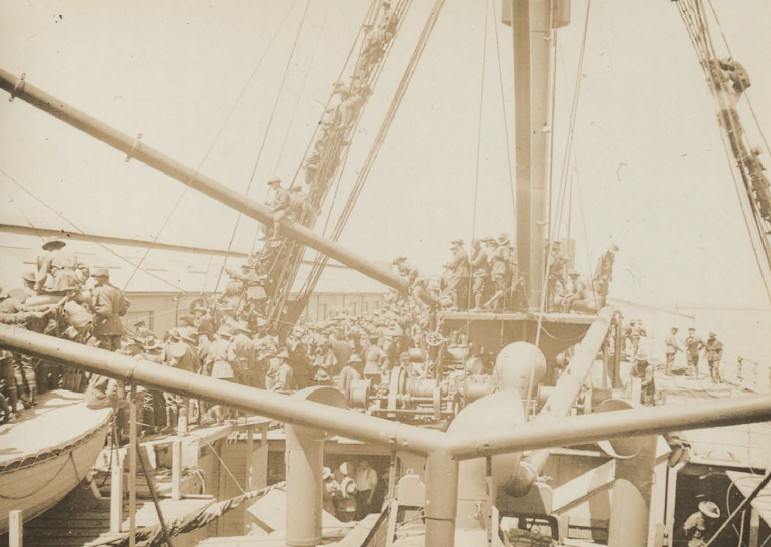
Four days after arriving in Egypt, on 22 December 1915, the battalion was dispersed to various posts along the Suez Canal. A and B Companies remained at the main post at El Ferdan, except for Nos. 5 and 6 Platoons, which were detached to Ridge Post. Eric was disappointed to be separated from Perce. While the men at Ridge Post enjoyed a much happier Christmas and New Year, complete with sing-songs and what Eric described as a "screamingly funny" sports day, those remaining at El Ferdan faced a far heavier workload. When Eric returned to El Ferdan, he found Perce exhausted from the demands of command.
Writing to his parents on 6 January 1916, he wrote:
I am with my pal, Perce Hagan, once again. He, poor boy, is just about all in. He has not had his clothes off for 8 days and is absolutely exhausted. I made him sleep all day, and now I will be able to help a good deal with an extra platoon.
Eric explained that two of Perce's platoons had been on continuous duty for three days and nights before being ordered to haul a heavy military punt across the Suez Canal, a task normally requiring twenty men. Despite their exhaustion, they marched out singing:
"Are we downhearted? No, no, NO!
Are we downhearted? No, no, NO!
Troubles may come and troubles may go,
Still we keep smiling where'er we go.
Are we downhearted? Are we downhearted? No, no, NO!"
He concluded proudly:
"That is typical of the Australian soldier. No wonder they make good fighters."
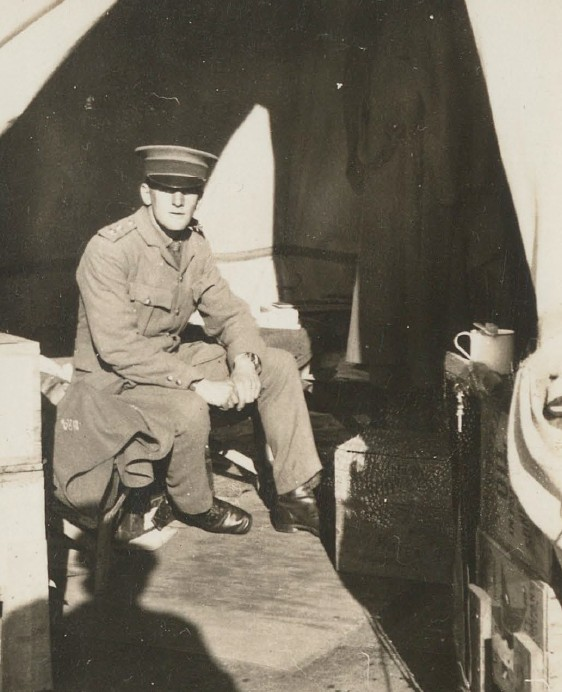
Despite the demanding routine, the friendship between the two officers flourished. Writing from Ismailia in February 1916, Eric casually mentioned "You know Perce Hagan, our tentmate." The two young officers shared a tent, meals, parcels from home and the daily routines of camp life.
Source Eric H. Chinner Papers, State Library Victoria, MS 11452, Letter from Ismailia, 2 February 1916.
Their companionship extended beyond military duties. During three days' leave in January 1916, Eric wrote "Perce Hagan and I got ours together, and we went to Cairo." The pair employed a guide to explore the native bazaars, marvelling at the "Persian hand-worked silk carpets valued at from £600 to £1000. They were beyond description." They also visited the Pyramids, the Sphinx, Heliopolis and Shepheard's Hotel before calling on friends in nearby camps.
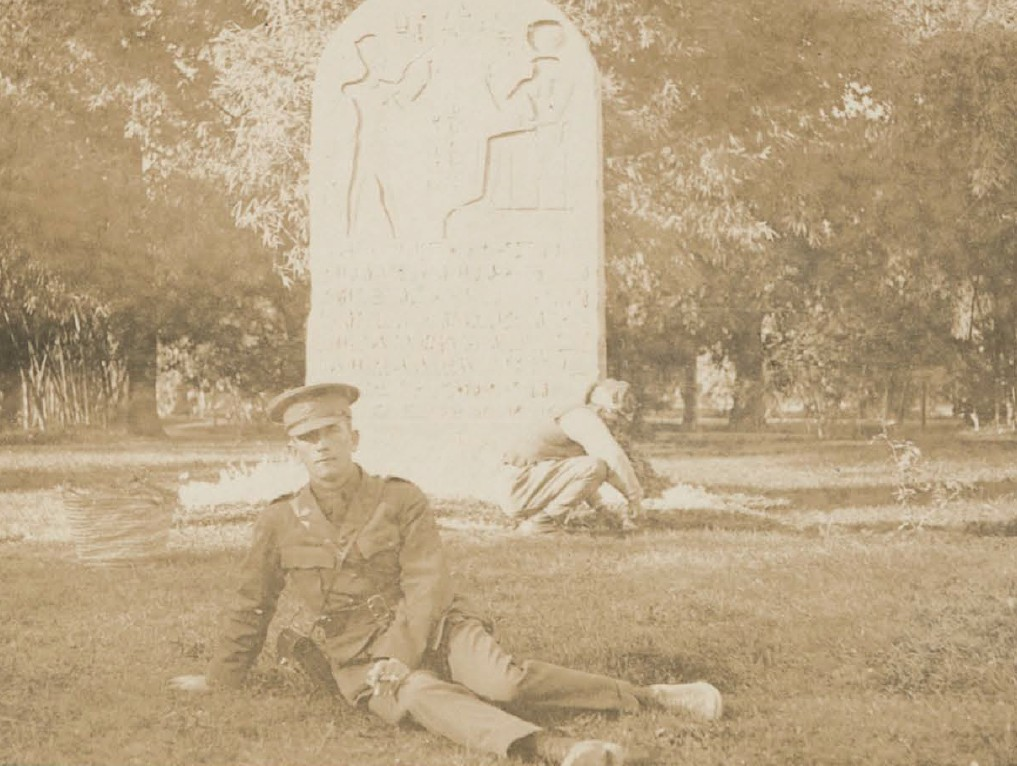
Like many Australians, they encountered the temptations of wartime Egypt, but Eric noted that neither he nor Perce had any interest in drinking or gambling:
It's a great help to have a pal like Perce. We are very much support to each other because neither of us drinks, gambles or mixes with those who do.
On 29 February 1916, tragedy struck B Company during a training exercise when 509 Private Ernest George Hann was accidentally shot through the eye after a live cartridge became mixed with dummy ammunition. As Hann's platoon commander, the incident must have deeply affected Perce. Although the subsequent Court of Inquiry found that no individual was directly responsible, the battalion's first death since arriving in Egypt cast, in the words of Private Victor Goldney, "a gloom over the whole company."
The battalion attended Hann's funeral with full military honours at Tel-el-Kebir. A headstone was later erected over Hann's grave by the officers, NCOs and men of B Company. Goldney later recalled:
"Never before did the Last Post seem to have such meaning as when we stood and heard it played over the grave of a dead comrade."
On 21 March 1916, while at Tel-el-Kebir, Perce was promoted to Lieutenant. As preparations continued for service in France, Eric proudly described the officers of B Company:
There are 6 of us together and we are a very happy crew. We are by far the youngest set of officers in the Battalion, if not the Brigade. Capt Frank Lloyd is our boss (23), Capt Jack Hutchens is the second in command (24), Lieut Jim O'Connor is senior lieutenant (30), Lieut Alan Campbell (29), Perce Hagan (21) and myself (22). So you see we are all on the youngish side. Nevertheless we are looked upon as the best Company in the Battalion."
He also described the leadership style within the company "Capt. Lloyd is a hard grafter and works us like billyo. We are never allowed a bite until our men are fed. We were laughing and joking about it today, and Perce said that if we are torpedoed in the Mediterranean, the Captain would want to know if our men are fed."
Source Eric H. Chinner Papers, State Library Victoria, MS 11452, June 1916.
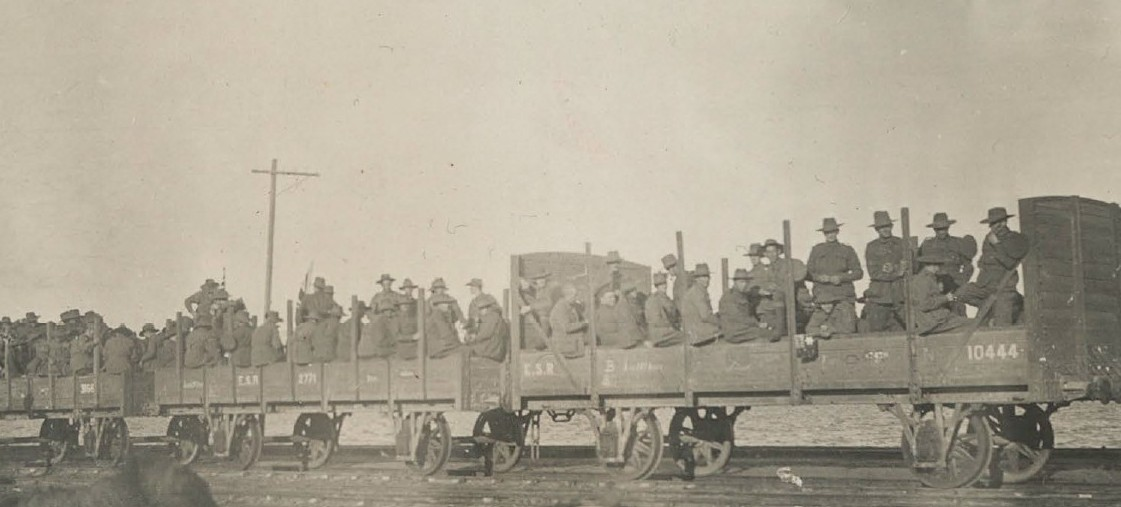
In June 1916 the battalion embarked aboard HMT Transylvania for France, landing at Marseilles on 23 June before travelling north by train. Private Theodor Pflaum remembered the enthusiastic reception:
The people flocked out all along the line and cheered us as though we had the Kaiser as prisoner on board!!
For many of the Australians, France seemed a world away from the heat and dust of Egypt. Private Wesley Choat later reflected:
The change of scenery in La Belle France was like healing ointment to our sunbaked faces and dust filled eyes.
Even after reaching France, Eric's letters continued to mention Perce almost in passing, as though his family naturally expected news of him. Thanking them for a parcel from home, he referred to sharing "Perce's parcel", another small reminder that the two friends remained together in B Company as they prepared for their first battle. By mid-July the 32nd Battalion had moved into the front line near Bois-Grenier opposite the German trenches at Fromelles. Only weeks after arriving in France, Perce and the men of the 32nd Battalion were preparing for their first major action on the Western Front.
The Battle of Fromelles
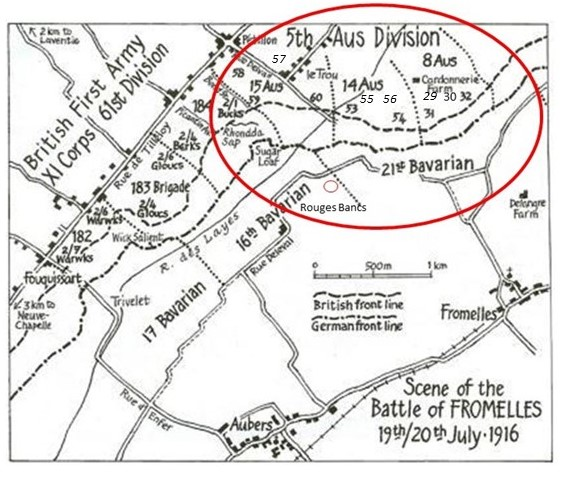
Only weeks after arriving in France, Perce and the men of the 32nd Battalion were committed to their first major action on the Western Front at the Battle of Fromelles on 19–20 July 1916. The battalion formed the extreme left of the Australian assault, with B Company, including Perce, assigned to the first waves of the attack. Heavy rain on 17 July forced the attack to be postponed for two days. During the delay the Australians remained crowded in assembly trenches under constant German shellfire.
At 5.53 PM on 19 July, the men climbed from their trenches and advanced across No-Man's-Land behind the creeping artillery barrage. Despite devastating machine-gun and rifle fire, the 32nd Battalion succeeded in reaching and capturing the German front-line trench before pushing through towards the second line. Charles Bean later explained that the battalion passed beyond the first trench and eventually occupied what they believed was the second German trench, only to discover it was a shallow drainage ditch. There, under relentless bombing attacks launched from the ruins of Delangre Farm on their left, the Australians attempted to establish a defensive position as German forces steadily worked around both flanks. Charles Bean later described the situation:
"The battalion went across No Man's Land after the barrage and reached the enemy's line, went through and over the first trench, and out beyond it in search of the second trench... Finally they brought up in a shallow trench or ditch... They began to turn this into a firing line but were greatly hampered by the attacks of small parties of Germans from a ruined farm on their left... Eventually the men in the trench or ditch, finding the Germans fighting right in behind them, broke back. Some of them had to fight their way through the Germans behind them."
Throughout the night the battalion endured repeated bombing attacks as ammunition and bombs began to run short. By about 3.45 AM the Germans had penetrated both flanks, and by 5.30 AM the Australians were surrounded on three sides. Orders were finally given to withdraw. The survivors were forced to fight their way back across No-Man's-Land under intense machine-gun fire sweeping the open ground. Perce fought throughout the night alongside his company. Bean later wrote that he remained with the battalion until the withdrawal at first light:
"Lieut. Hagan fought all through the night. He was coming back across No Man's Land in the morning, in the retirement, when he was hit by a machine gun which was playing across the line of our retirement."
Captain Jack Hutchens, who was also making his way back across No-Man's-Land, later came upon Perce in a shell hole:
"It was Lieut. Hagan, who had been shot through the chest by a machine gun. He was about halfway across, and had been instantly killed."
Lieutenant Cecil Blakeley Thomas recalled seeing Perce fall during the withdrawal:
"I knew Lt Hagan, he was in B Coy and I saw him fall on the morning of July 20th... He was hit by a machine gun and by the way he fell I think it must have struck his heart... I am practically certain that he was killed."
Private John Francis Davis also passed Perce's body during the retirement:
"I saw him lying in No Man's Land... I passed right by him and am quite sure that he was dead."
Perce's close friend Eric also fought with B Company throughout the night and was also killed in action. By 7.30 AM on 20 July, the shattered remnants of the 32nd Battalion had withdrawn to the Australian lines. Of the battalion's 1,026 officers and men who entered the battle, 718 became casualties. More than 220 were killed, many with no known grave. Among them was the twenty-two-year-old Perce, one of the promising young officers whose life ended during the battalion's first battle on the Western Front.
After the Battle
In the days following the Battle of Fromelles, Perce was officially reported missing. Like many families across Australia, the Hagan family endured weeks of uncertainty while witness statements were gathered and enquiries made through the Australian Red Cross Wounded and Missing Enquiry Bureau. Reports from surviving members of B Company gradually confirmed that Perce had been killed during the withdrawal from the German trenches in the early hours of 20 July 1916. Despite repeated enquiries, no trace of him was ever found in German records. One Red Cross notation later recorded:
“No trace Germany. Cert. by Capt. Charles Mills, 10.10.19.”
News of Perce’s death deeply affected the Semaphore and Exeter communities where he had been well known through scouting, military and sporting circles. Newspapers across South Australia carried reports of his death and remembered him as one of the state’s promising young officers. One article noted that Perce and Eric Chinner had served together before the war, trained together at Duntroon, and gone overseas as fellow officers in the 32nd Battalion.
Source: 'LIEUT. T. P. HAGAN.'. (12 August 1916). Observer (Adelaide, SA : 1905 - 1931), p. 37. Retrieved 20 May 2026, from http://nla.gov.au/nla.news-article164669945
Perce’s personal effects were later returned to his family, including a sealed valise and his Sam Browne belt. His mother, Edith Alice Hagan, who had been listed as his next of kin, was later granted a war pension following his death. The Hagan family continued to publicly mourn Perce in the years after the war. On the first anniversary of his death, memorial notices were placed in South Australian newspapers by both his parents and his brother Ernest. His parents wrote:
“Greater love hath no man than this, that he lay down his life for his friends.”
Perce's death was especially devastating for his younger brother Ernest. The two brothers had grown up together just two years apart and shared a close bond throughout their lives. Ernest continued to honour Perce's memory for many years, placing annual memorial notices in South Australian newspapers. One tribute simply read:
"In a soldier's grave he is sleeping, One of earth's bravest and best. In my heart I shall miss him for ever, Though I know he is only at rest."
Ernest had married Olivette Holzberg in 1913, and together they later raised two sons, Lionel and Ernest. Through them, the Hagan family line continued, while Perce remained forever the young officer who never returned from Fromelles.
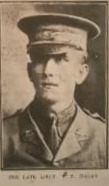
Legacy
Perce was awarded the 1914–15 Star, British War Medal and Victory Medal for his service.
He is commemorated at:
- VC Corner Australian Cemetery Memorial, Fromelles, France (Panel 4A)
- Australian War Memorial Roll of Honour, Canberra (Panel 120)
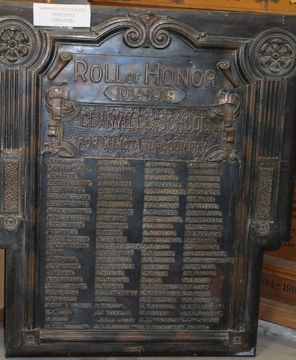
- Exeter Semaphore Uniting Church Roll of Honour
- Peterhead Glanville School Roll of Honour
- Port Adelaide St Paul’s Church Memorial Alcove
- Semaphore Roll of Honour
- South Australian National War Memorial
Perce was remembered as a capable young officer, athlete and community leader whose life was cut short only weeks after arriving on the Western Front. Newspapers following his death described him as popular among both soldiers and scouts and praised his “personal manliness of character.”
Source 'BOY SCOUTS' ASSOCIATION.'. (11 August 1916). The Register (Adelaide, SA : 1901 - 1929), p. 11. Retrieved 20 May 2026, from http://nla.gov.au/nla.news-article60607865
Eric Chinner was eventually identified at Pheasant Wood. The two friends who had trained together before the war, shared a tent in Egypt, toured Cairo together and crossed to France side by side, both died at Fromelles within hours of one another. More than 110 years after the Battle of Fromelles, Perce remains one of the missing. Although remembered on memorials across South Australia and France, his final resting place is still unknown. Through DNA testing there remains the possibility that one day he may be reunited with his name and his friend.
Finding Perce
Perce’s body was never recovered after the Battle of Fromelles, and he has no known grave. His name is commemorated on Panel 4A of the VC Corner Australian Cemetery Memorial at Fromelles, where hundreds of Australian soldiers lost during the battle are remembered. Because Perce was never formally buried or identified, it remains possible that he was among the Australian soldiers buried by the Germans in the mass graves near Pheasant Wood after the battle. As of 2026, many soldiers recovered from Pheasant Wood have been identified through DNA provided by descendants and extended family members.
Perce may still be among the unidentified soldiers awaiting a name. If you are connected to the Hagan/Hagen, Loveday, Anderson or Lauder families of South Australia or Scotland, your family connection may help future identification efforts.
Please contact the Fromelles Association if oyu would like to find out more.
DNA samples are being sought for family connections to
| Soldier | Thomas Percival “Perce” Hagan (1894–1916) |
| Parents | Thomas Page Hagan (1869–1931), born Port Glasgow, Renfrewshire, Scotland & Edith Alice Loveday (1873–1921), born Salisbury, South Australia |
| Siblings | William Sydney Hagan (1893–1893), died in infancy | ||
| Ernest Alfred Hagan (1896–1940) married, 2 sons. | |||
| Edith Alice Hagan (1897–1898), died in infancy |
| Grandparents | |||
| Paternal | William Hagen & Matilda Anderson | ||
| Maternal | Richard John Loveday (1844–1925) & Jane Hampton Lauder (1845–1905) |
Links to Official Records
Seeking DNA Donors

Contacts
(Contact: carla@fromelles.info or geoffrey@fromelles.info).
(Contact: army.uwc@defence.gov.au or phone 1800 019 090).
Donations
If you are able, please contribute to the upkeep of this resource.
(Contact: bill@fromelles.info ).